
FROM HARDSHIP TO HOPE: Denny Hamlin’s Reported $3.2 Million Vision That Could Redefine the Meaning of Legacy
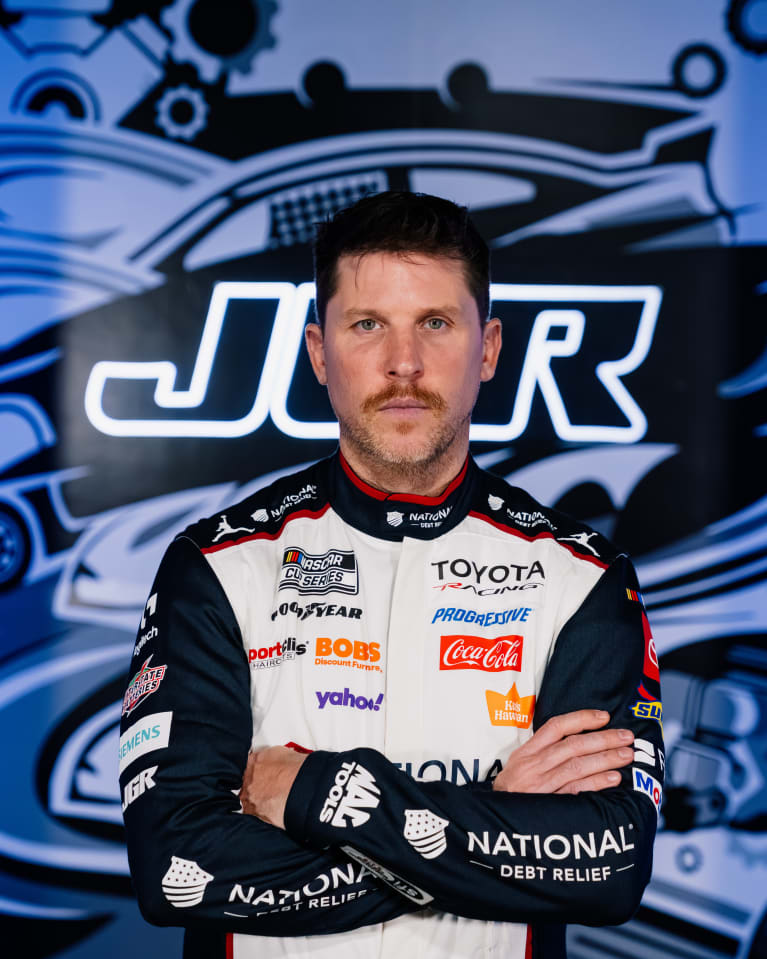
Denny Hamlin has spent most of his professional life chasing victories at breathtaking speed, but this time, the NASCAR star’s most surprising move reportedly happened far away from any racetrack.
And if the story sounds unexpected, that is exactly why it has captured so much attention among fans who thought they already understood the veteran Joe Gibbs Racing driver.
This wasn’t supposed to be another racing announcement, another contract negotiation, or another sponsorship unveiling involving one of the most recognizable personalities in the modern NASCAR Cup Series garage.
Instead, the story centers on something far more personal: a modest home, memories of difficult beginnings, and an ambitious idea built around giving struggling families another opportunity to rebuild.
According to the story being shared, Hamlin quietly purchased a property connected symbolically to the hardships of his early years, keeping the plans largely out of the public spotlight.
Then came the revelation that transformed what appeared to be a simple real-estate purchase into something carrying a much larger purpose and an unexpectedly powerful emotional message.
The reported plan was to transform the property into the “Denny Hamlin House,” a facility designed specifically to support women and children struggling with homelessness, addiction, and instability.
The proposed investment attached to the project was equally striking: approximately $3.2 million dedicated not to luxury, entertainment, or another symbol of celebrity success, but to second chances.
For fans accustomed to measuring Hamlin’s career through trophies, victories, playoff performances, and championship pursuits, the idea presented a completely different way of measuring what an athlete leaves behind.
From hardship to hope.
From personal struggle to giving back.
From chasing checkered flags to helping people who may simply be searching for a safe place where they can begin rebuilding their lives.
That is the emotional foundation behind the story, and it connects naturally to the well-known sacrifices surrounding Hamlin’s journey toward NASCAR’s highest level.
Long before the fame, Hamlin was simply a young racer with enormous ambition and a family willing to sacrifice almost everything they reasonably could to keep that ambition alive.
His path to NASCAR was never guaranteed, and his family’s financial commitment to his racing dreams has become an important part of the story surrounding his eventual success.
Racing is expensive even at relatively modest levels, and families pursuing professional motorsports can quickly discover that talent alone does not pay for tires, engines, transportation, repairs, and entry fees.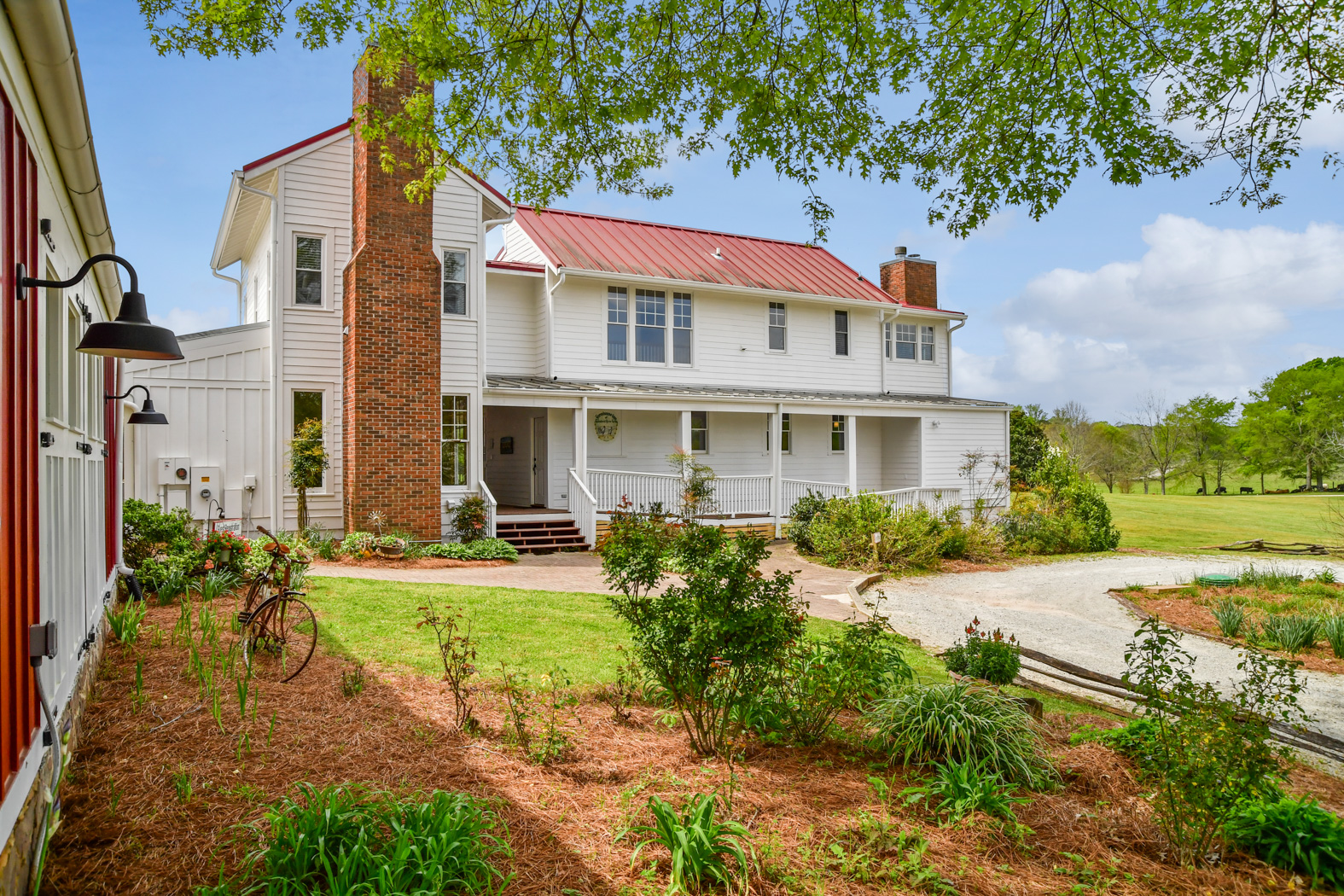
Hamlin’s parents believed strongly enough in their son that they continued supporting his development despite the enormous financial pressures associated with climbing through the ranks of American stock-car racing.
Those experiences matter when considering why a project centered on vulnerable families would resonate so strongly with people familiar with Hamlin’s background and the sacrifices behind his success.
There is a significant difference between being poor and experiencing homelessness or addiction, and those experiences should never be casually treated as though they are interchangeable.
But financial uncertainty can teach someone something important: security should never be taken for granted, and a single opportunity can sometimes change the direction of an entire life.
Hamlin eventually received his opportunity.
He reached NASCAR’s highest level, began winning races, established himself as an elite Cup Series competitor, and transformed his family’s extraordinary gamble into a remarkable American racing success story.
Over time, the young driver whose family had stretched resources to keep him racing became a multimillionaire athlete, successful businessman, team co-owner, and one of NASCAR’s most influential voices.
Success changed his circumstances dramatically.
But according to this inspirational telling, it did not erase his memory of what uncertainty felt like or the sacrifices required before anyone knew his name.
That is where the reported “Denny Hamlin House” takes on a meaning far greater than the physical structure itself.
A house is normally understood as walls, rooms, doors, windows, and a roof protecting the people who sleep underneath it.
A home means something different.
Home means safety.
It means knowing where you will sleep tonight.
It means children waking up somewhere predictable rather than wondering where their family will go next.
For people experiencing homelessness, that stability can disappear with frightening speed, sometimes after job loss, family breakdown, illness, domestic crisis, addiction, or an accumulation of circumstances impossible to overcome alone.
Women with children can face particularly complicated challenges because every decision affects not only themselves but young people depending entirely on them for protection, food, shelter, and emotional security.
Add addiction to that struggle and recovery can become even more difficult.
Treatment is rarely a simple matter of telling someone to stop using substances and expecting life to immediately return to normal.
Recovery can require professional care, stable housing, counseling, employment assistance, childcare, transportation, and a supportive environment where setbacks do not automatically become permanent failures.
That is why the concept behind the reported Hamlin facility is so compelling.
The idea is not simply to provide temporary shelter.
It is to create an environment centered on rebuilding.
In the envisioned version of the project, women would have access to recovery support while remaining connected with their children rather than facing another painful separation during an already difficult period.
Children could experience stability while their mothers worked toward recovery, independence, employment, and the practical skills necessary to build sustainable lives outside the facility.
The building, therefore, would represent something larger than charity.
It would represent transition.
A bridge between the moment when someone’s life appears to be collapsing and the moment when rebuilding finally begins to seem possible.
The reported $3.2 million investment makes the story even more striking because professional athletes are constantly surrounded by visible symbols of wealth.
Fans see enormous homes.
Luxury cars.
Private travel.
Designer clothing.
Expensive vacations.
None of those things are inherently wrong. Successful athletes earn the right to decide how they spend the money produced by careers that are often demanding and relatively short.
But choosing to direct millions toward people who cannot offer fame, sponsorship, trophies, or competitive advantage in return sends a very different message about what success can mean.
The line attributed to Hamlin captures that idea perfectly, even though it should be treated as part of the unverified story unless independently documented.
“I’m not going to build luxury for myself,” Hamlin is described as saying. “I’m going to create second chances for others.”
Second chances.
Those two words carry extraordinary weight.
Sports are built around second chances, even when athletes rarely describe them that way.
A driver has a terrible race and returns the following weekend.
A championship disappears after one mistake, and another season eventually begins.
A team struggles, rebuilds, and tries again.
Life is rarely so structured.
There is no guaranteed next race for someone who loses housing.
There is no automatic reset button for someone battling addiction.
There is no new season waiting conveniently on the calendar for a mother trying to rebuild everything.
Sometimes people need someone else to help create that second chance.
That is what makes the philosophy behind this story resonate beyond NASCAR.
It asks a simple question about success: What happens after you have accumulated enough victories, money, recognition, and influence to change your own life?
Do you simply keep building upward?
Or do you reach backward and help someone else climb?
Hamlin’s public image has long been associated with fierce competitiveness.
He races aggressively.
He speaks confidently.
He rarely appears interested in pretending that winning does not matter deeply to him.
That personality has made him both enormously popular and deeply polarizing throughout different stages of his career.
Some NASCAR fans cheer loudly whenever Hamlin reaches Victory Lane.
Others cheer just as loudly whenever another driver beats him.
Hamlin seems to understand that dynamic and has often appeared willing to embrace the role of NASCAR personality rather than seek universal approval.
But stories about charitable work reveal another dimension of how professional athletes can use the platform created by competition.
A person does not need to be universally loved to help people.
Compassion does not require popularity.
And generosity is not measured by how loudly the crowd applauds.
The most powerful part of the reported project may therefore be the idea that the purchase happened quietly.
There was reportedly no dramatic unveiling when the property was acquired.
No massive publicity campaign immediately surrounding the transaction.
No need to turn the first step into spectacle.
Instead, the significance emerged through the purpose attached to the property.
That matters because genuine community support often begins long before cameras arrive.
It begins with planning.
Permits.
Staff.
Funding.
Partnerships.
Counselors.
Social workers.
Beds.
Kitchens.
Childcare spaces.
Programs capable of turning a compassionate idea into sustainable assistance.
A multimillion-dollar building alone cannot solve homelessness or addiction.
That distinction is essential.
Successful recovery facilities require trained professionals, evidence-based programs, careful administration, long-term funding, community partnerships, and systems designed around the individual needs of the people receiving support.
But infrastructure can create the place where that work becomes possible.
A safe room can become the first stable night someone has experienced in months.
A counseling office can become the place where recovery begins.
A childcare space can give a mother time to attend treatment or prepare for employment.
A kitchen table can become the first place a family has eaten together peacefully after months of instability.
Those moments will never attract the audience of a NASCAR race.
There will be no television graphics documenting them.
No leaderboard will measure the progress.
But their consequences can last generations.
Helping one mother achieve long-term stability does not affect only one person.
It can change the environment in which her children grow up.
Those children may experience greater stability in school, relationships, housing, and eventually their own adult lives.
That is how community investment multiplies.
The immediate beneficiary may be one person, but the long-term impact can extend far beyond the original act of assistance.
For Hamlin, that would represent an entirely different kind of legacy.
His racing achievements are already part of NASCAR history.
Fans will debate where he belongs among the greatest drivers of his era.
They will analyze victories, major races, playoff performances, and championship opportunities.
Those debates are inevitable.
But legacy is larger than statistics.
Eventually, every athlete stops competing.
The helmet comes off for the final time.
The race car moves on to another driver.
New stars arrive.
Records are challenged.
Young fans begin cheering for names that previous generations never knew.
What remains?
That is the question every great athlete eventually confronts.
For some, the answer is trophies.
For others, businesses.
For others, foundations and community institutions capable of continuing their influence long after their competitive careers end.
A facility helping women and children rebuild their lives would belong firmly in that final category.
Imagine a child arriving there after months of instability.
That child might know nothing about NASCAR.
Denny Hamlin’s victories might mean absolutely nothing to them.
They may never have watched the Daytona 500 or understood what a Cup Series championship represents.
And that is precisely the point.
Charity is not supposed to require fandom.
The child does not need to know who paid for the building.
The mother does not need to own racing merchandise.
They simply need the opportunity the facility was created to provide.
If successful, the most important stories emerging from such a project would not be about Hamlin at all.
They would belong to the people who walked through its doors.
A mother reaching one year of sobriety.
A woman finding stable employment.
A family moving into permanent housing.
A child returning consistently to school.
Someone reconnecting with relatives.
Someone believing in the future again.
Those are victories without checkered flags.
And they are victories that cannot be measured in seconds.
For someone whose entire professional life has been defined by the stopwatch, there is something almost poetic about that transformation.
Hamlin has spent decades trying to arrive first.
The next phase of legacy may instead involve helping others arrive somewhere safe.
From speed to stability.
From competition to compassion.
From winning races to helping people rebuild lives.
That does not diminish anything Hamlin has accomplished behind the wheel.
It expands the definition of accomplishment.
Perhaps that is why the story has generated such an emotional response among fans.
They expected another NASCAR headline.
Instead, they encountered a story about purpose.
They expected news about contracts, sponsorships, racing, retirement, or the future.
Instead, they heard about second chances.
And whether someone has supported Hamlin throughout his career or spent years rooting against him, the underlying idea is difficult to dismiss.
People facing homelessness deserve dignity.
People battling addiction deserve pathways toward recovery.
Children caught inside circumstances they did not create deserve safety and stability.
If athletes with significant resources choose to help build those pathways, their influence can extend far beyond the sport that made them famous.
That is ultimately what the “Denny Hamlin House” story represents.
Not merely a building.
Not merely $3.2 million.
Not merely another celebrity charitable project.
It represents the possibility of transforming personal success into opportunity for people who desperately need another beginning.
Hamlin spent his youth chasing a dream that might easily have disappeared because his family lacked unlimited resources.
Someone believed in him anyway.
Someone sacrificed.
Someone gave him enough opportunities to continue.
Now, according to this inspirational account, the circle is turning in another direction.
The racer who once needed others to keep his dream alive wants to create a place where people fighting entirely different battles can keep their own hopes alive.
That may ultimately matter more than any headline announcing another victory.
Because trophies sit on shelves.
Records eventually fall.
Race cars become museum pieces.
But a second chance can change an entire family.
And if that family changes the life of a child, the impact can continue long after everyone has forgotten who finished first on any particular Sunday.
That is how a sporting legacy becomes a human one.
Denny Hamlin has spent his career proving how quickly he can reach a finish line.
The bigger question now is what he chooses to build before reaching the final one.
If the vision behind this reported project becomes reality, the answer will not be found in another luxury home or another symbol of celebrity wealth.
It will be found in the lives rebuilt inside a modest house with an extraordinary purpose.
A place where women can recover.
Where children can feel safe.
Where families can begin again.
Where failure does not have to be permanent.
Where yesterday does not have to determine tomorrow.
And where the most important words are not “You won.”
They are:
“You get another chance.”
From hardship to hope.
From racing dreams to human dignity.
From personal success to something capable of outlasting a career.
That would be a legacy no trophy could ever fully measure.
