
“WHAT PEOPLE ARE DOING TO HIM IS A CRIME.” Those explosive words attributed online to Jordan Fish have added another emotional dimension to controversy surrounding NASCAR superstar Denny Hamlin.
The veteran driver has spent much of his career competing under extraordinary pressure, but the latest storm surrounding 23XI Racing has pushed discussion far beyond what happens on track.
A controversial penalty involving the organization quickly triggered arguments among NASCAR followers, with fans debating responsibility, fairness, competitive consequences, and whether Hamlin and those around him deserved the backlash.
Yet the conversation soon became considerably more personal as social-media criticism moved away from racing decisions and toward Hamlin himself, creating an increasingly uncomfortable atmosphere around the unfolding controversy.
Online posts attributed to Fish suggested that the public sees only a fraction of the pressure Hamlin experiences privately, although those claims have not been independently verified or fully contextualized.
That distinction matters because dramatic statements circulating through fan communities can quickly become accepted as established facts, particularly when anger, loyalty, rivalry, and competitive disappointment are already running high.
Still, the emotional reaction illustrates something important about modern NASCAR: drivers are no longer judged only by victories, championships, rivalries, and performances during a Sunday afternoon at the racetrack.
They also exist inside a relentless digital environment where every decision can become content, every disagreement can become controversy, and every controversy can suddenly become deeply personal online.
Hamlin understands intense scrutiny better than most competitors after spending nearly two decades racing at NASCAR’s highest level and becoming one of the sport’s most recognizable and polarizing personalities.
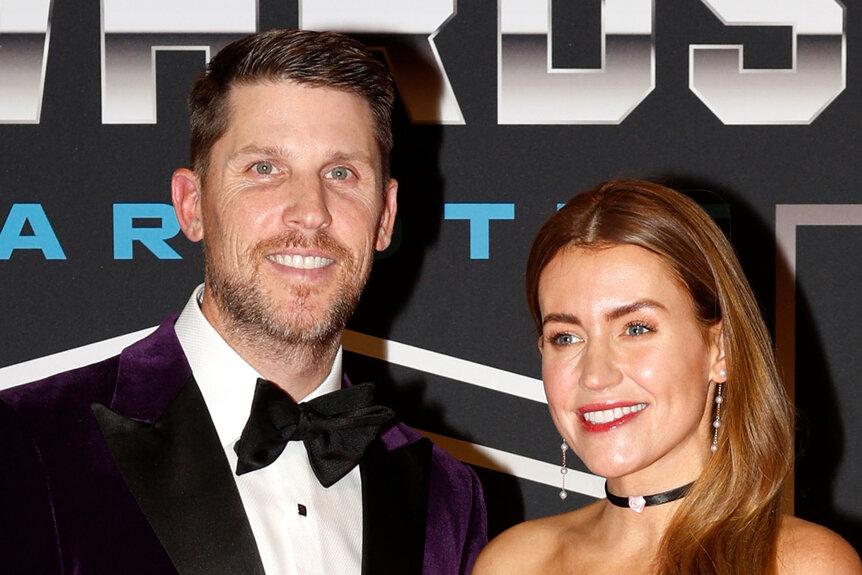
His aggressive competitiveness has earned enormous respect from supporters, but it has also made him a natural target for critics who rarely hesitate to challenge his comments, decisions, or behavior.
That polarization has followed Hamlin through victories, heartbreaking playoff defeats, confrontations with other drivers, public disagreements about NASCAR policies, and his increasingly influential role as a team co-owner.
But criticism of racing decisions is fundamentally different from personal attacks, and that distinction has become central to the debate now unfolding among fans across NASCAR’s enormous online community.
Supporters argue that disagreements involving 23XI Racing should remain focused on rules, penalties, competition, and organizational decisions rather than turning into attacks against individuals or their private lives.
Critics counter that highly visible figures inevitably face intense public scrutiny, especially when they openly challenge NASCAR leadership or participate in disputes affecting teams, competitors, sponsors, and the championship picture.
Both arguments have fueled a larger question that professional sports increasingly must confront: where should legitimate criticism end, and at what point does relentless online hostility become unacceptable personal harassment?
For Hamlin, that question carries additional weight because he occupies two positions simultaneously, competing as a driver for Joe Gibbs Racing while helping lead 23XI Racing as an organization.
That unusual position gives him a powerful voice inside the garage, but it also guarantees that controversies involving either his driving career or ownership interests attract immediate national attention.
When 23XI becomes involved in a dispute, Hamlin therefore cannot easily remain outside the conversation, regardless of whether he personally caused the situation that initially triggered the public reaction.
The same visibility that makes him valuable to NASCAR also makes him vulnerable to criticism from people who associate his personality with virtually every issue involving organizations connected to him.
That dynamic can become especially intense when penalties are involved because NASCAR supporters have historically debated officiating decisions with the same passion they bring to rivalries between their favorite drivers.
A penalty rarely ends when officials announce it. Instead, fans analyze video, compare previous rulings, question consistency, examine rulebook language, and argue over whether NASCAR treated every competitor equally.
Those debates are an essential part of sports culture, and disagreement itself is not the problem. Passionate supporters should be able to criticize teams, drivers, officials, and decisions freely.
The situation changes, however, when criticism shifts toward personal insults, threats, harassment, or speculation about private circumstances that have little relationship to what actually happened on the racetrack.
That appears to be the concern driving much of the emotional response surrounding the comments attributed to Fish, particularly the suggestion that Hamlin has endured significant difficulties outside public view.
No complete verified account of those alleged private struggles has accompanied the viral claims, making it important not to invent details or treat social-media speculation as confirmed information about Hamlin.
Nevertheless, the broader message has resonated strongly: famous athletes may experience pressures invisible to millions of people watching them compete, speak during interviews, or celebrate victories on television.
NASCAR drivers face a uniquely demanding environment combining physical danger, constant travel, sponsorship responsibilities, media appearances, organizational obligations, training, simulator work, competition, and enormous expectations from fans.
For someone carrying responsibilities as both an elite driver and team owner, those demands can become even greater, particularly when major business disputes overlap with championship ambitions and personal responsibilities.
Hamlin has consistently demonstrated an ability to function under pressure, which can create the misleading impression that experienced athletes become immune to stress simply because they appear composed publicly.
Professional competitors are trained to compartmentalize emotions, focus on immediate objectives, and perform despite distractions. That ability, however, does not necessarily reveal what happens after cameras disappear each weekend.
This is why the latest debate has expanded beyond the original penalty and into a broader conversation about empathy, accountability, and the increasingly aggressive nature of online sports communities.
Some Hamlin supporters have demanded greater restraint from people attacking him personally, arguing that criticism should address specific decisions rather than attempting to damage someone’s reputation or personal relationships.
Others remain firmly opposed to Hamlin’s positions and insist that strong criticism is unavoidable when a prominent team owner publicly challenges decisions affecting the direction and governance of NASCAR.
There is room for fierce disagreement without assuming that every critic is malicious or that every supporter is blindly loyal. NASCAR has always thrived partly because its audience cares passionately.
The sport’s history is filled with personalities who generated powerful reactions, from beloved champions to intimidating villains, outspoken veterans, rebellious newcomers, and competitors who seemed comfortable embracing controversy publicly.
Hamlin belongs firmly within that tradition. He has never needed universal approval to remain relevant, and his willingness to speak candidly has helped make him one of NASCAR’s central voices.
But the digital era has transformed the scale of that attention. Earlier generations faced angry crowds and critical journalists; today’s drivers can encounter thousands of hostile messages within minutes.
A single clip can circulate across multiple platforms without context, producing reactions from viewers who may never have watched the complete interview or understood the circumstances surrounding the original statement.
Rumors can travel even faster, especially when dramatic headlines promise secret revelations, hidden suffering, shocking confrontations, or statements supposedly made by people close to a famous athlete.
That environment makes verification increasingly important. Claims attributed to Fish should therefore be treated cautiously unless supported by direct statements, reliable reporting, interviews, or other independently verifiable primary evidence.
Doing so does not diminish legitimate concerns about online abuse. Instead, it separates two issues that can coexist: harassment can be unacceptable while sensational claims about private circumstances remain unconfirmed.
The distinction is particularly important because personal stories create emotional reactions far more powerful than technical arguments about NASCAR regulations, penalties, inspections, ownership structures, or competitive procedures.
Once audiences believe that someone is secretly suffering, the conversation naturally changes. Anger can become sympathy, criticism can become defensiveness, and ordinary sporting disagreement can suddenly feel morally significant.
That transformation appears to explain why the reported comments have generated such a divided response among fans who previously viewed the controversy primarily through the lens of competition.
For supporters, the message represents a reminder that Hamlin is a human being behind the helmet, statistics, trophies, television interviews, team ownership responsibilities, and occasionally confrontational public persona.
For critics, however, emotional appeals should not prevent legitimate examination of decisions made by powerful figures within NASCAR, particularly individuals whose influence extends beyond driving a race car.
Those positions are not necessarily incompatible. Fans can scrutinize Hamlin’s professional actions intensely while simultaneously recognizing boundaries around harassment, threats, family members, and unsupported speculation about private matters.
That balance could become increasingly important as NASCAR expands its digital audience and drivers develop direct relationships with supporters through podcasts, livestreams, social networks, and other media platforms.
Hamlin himself has been particularly influential in that transformation, regularly participating in broader conversations about racing strategy, officiating, driver behavior, business decisions, and NASCAR’s future direction.
His visibility means controversy will probably never disappear completely. Indeed, outspoken personalities often generate the engagement modern professional sports organizations depend upon to remain culturally relevant between major events.
But engagement carries consequences. Algorithms frequently reward outrage because emotional posts generate comments and shares, potentially encouraging users to make increasingly dramatic claims simply to capture attention from larger audiences.
Within that system, athletes can become characters rather than people. Their mistakes are magnified, their comments simplified, and their personal circumstances transformed into entertainment for strangers who know little about them.
The reaction surrounding Hamlin therefore offers NASCAR fans an opportunity to reconsider how sporting rivalry operates when virtually every conversation can be amplified far beyond the original community.
Booing a rival driver at the racetrack has long been part of motorsports culture. Criticizing strategy, aggressive driving, team decisions, or controversial comments is equally normal within competitive sports.
Targeting someone relentlessly outside those boundaries is different, particularly when family relationships or alleged private struggles become ammunition in arguments that originally concerned rules and competitive penalties.
That difference may ultimately become the most significant lesson from the current episode, regardless of how supporters and critics feel about Hamlin, 23XI Racing, or NASCAR’s decisions.
Hamlin does not require universal sympathy for reasonable boundaries to exist. Nor should those boundaries protect him, or any prominent sports figure, from legitimate criticism of professional conduct and decisions.
The challenge is maintaining both principles simultaneously: powerful figures deserve scrutiny, while human beings deserve protection from harassment, threats, fabricated stories, and attacks unrelated to legitimate public-interest questions.
As emotions surrounding the 23XI situation continue, NASCAR supporters will undoubtedly keep arguing about responsibility, fairness, penalties, and what the controversy means for one of stock-car racing’s major organizations.
Those disagreements will probably remain intense because Hamlin has built a career around competition, ambition, and speaking openly even when his opinions generate significant resistance from NASCAR’s passionate fanbase.
Yet the unexpectedly personal dimension of this controversy has changed its tone, forcing some observers to look beyond racing politics and consider the human cost of constant public scrutiny.
Whatever Hamlin may be dealing with privately should not become a playground for unsupported speculation. Privacy remains meaningful even when the individual involved is one of NASCAR’s biggest stars.
Likewise, statements attributed to people close to him should be verified before they are presented as definitive revelations, particularly when those statements concern sensitive events outside the public record.
That responsibility belongs not only to journalists but also to fans, commentators, influencers, and social-media accounts capable of sending a dramatic claim to millions of people almost instantly.
The NASCAR community has always been fueled by disagreement. Fans debate manufacturers, generations, formats, playoff systems, officiating, personalities, tracks, schedules, rivalries, and virtually every significant decision surrounding the sport.
Those arguments can strengthen the community when they remain grounded in facts and respect, because passionate disagreement demonstrates how deeply supporters care about NASCAR and its competitors.
But when disagreement becomes personal cruelty, everyone loses something. The athlete becomes a target, fans become more divided, and legitimate debate becomes buried beneath increasingly extreme rhetoric and speculation.
The latest Hamlin controversy may eventually fade as another race, penalty, victory, rivalry, or championship storyline captures attention, as inevitably happens during NASCAR’s relentless competitive calendar each season.
The larger question will remain: how should fans treat athletes when entertainment collides with real life, and when public criticism begins reaching deeply into someone’s private world?
There may never be a universal answer, but one principle offers a reasonable starting point. Criticize what can be demonstrated, question decisions aggressively, and demand accountability when evidence supports it.
At the same time, resist turning rumors into facts or private pain into entertainment simply because a famous name makes the story more clickable, emotional, or commercially valuable.
For Denny Hamlin, controversy has never been unfamiliar territory. He has spent years racing through pressure, criticism, rivalry, disappointment, and expectations that would overwhelm many professional competitors.
What makes this moment different is the suggestion that another battle may exist beyond what audiences can see, even though the specific claims circulating online require careful independent verification.
That possibility has clearly struck a nerve among supporters and critics alike, transforming what began as another NASCAR controversy into a conversation about something considerably larger than racing.
Behind every helmet is a person. Behind every headline is context. And behind every viral claim should be a simple question before judgment begins: what do we actually know?
Until reliable evidence provides a fuller picture, that question may be the fairest way to approach both Hamlin’s situation and the emotional controversy now surrounding his name.
