
🚨 CHASE ELLIOTT STUNS NASCAR: Four Races in One North Wilkesboro Weekend — And the Kyle Busch Connection Changes Everything
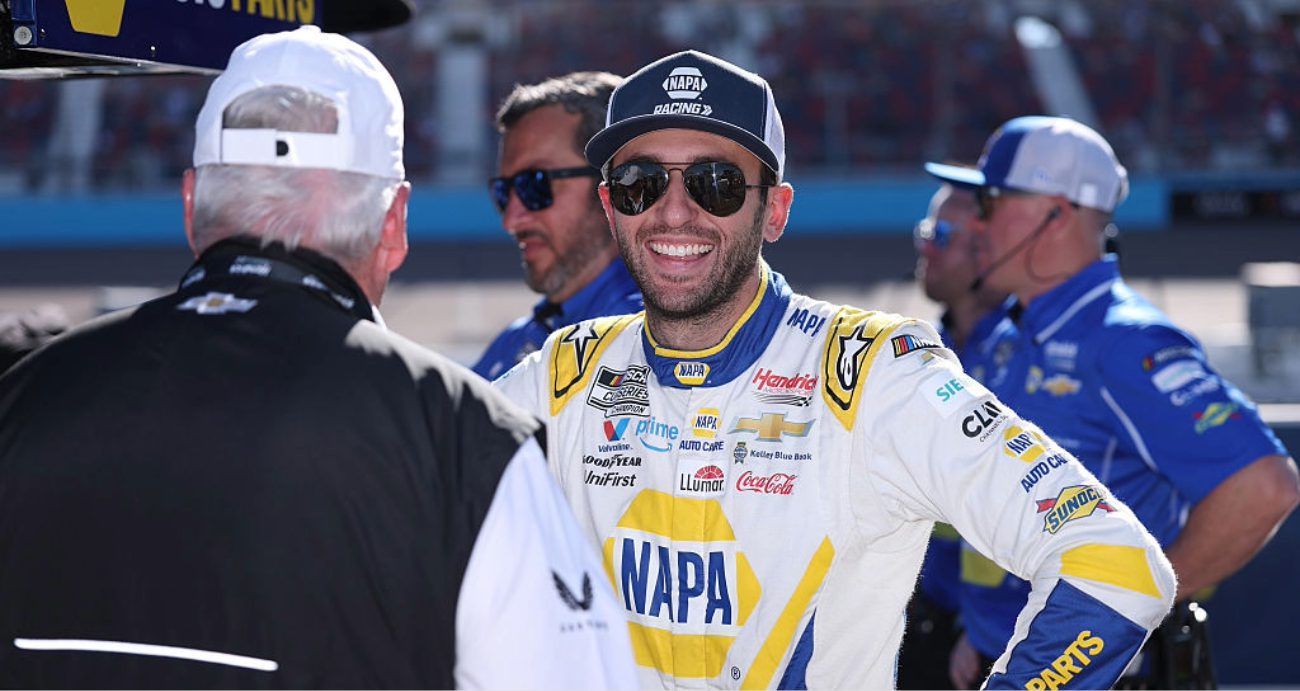
Just days before one of the most anticipated weekends at North Wilkesboro Speedway, Chase Elliott suddenly gave NASCAR fans another reason to circle the historic short track.
One race apparently wasn’t enough.
Two races weren’t enough.
Even three would not be enough for one of NASCAR’s biggest stars.
Chase Elliott was preparing to race four times.
The Hendrick Motorsports superstar signed up for an extraordinary quadruple-duty weekend featuring two CARS Tour events, a NASCAR Craftsman Truck Series race, and Sunday’s Cup Series showdown.
For most Cup Series drivers, preparing for one premier-series race represents a demanding weekend filled with practice, qualifying, team meetings, sponsor obligations, media responsibilities, and physical preparation.
Elliott decided to add three more races.
But the sheer workload wasn’t the only reason NASCAR fans immediately began talking.
There was another layer to the story.
And it involved Kyle Busch.
Two of the opportunities Elliott accepted — the Late Model Stock Car effort and the Craftsman Truck Series appearance — had originally been intended for Busch.
Elliott himself acknowledged that connection while discussing why the weekend carried more meaning than simply getting additional laps around one of America’s most beloved short tracks.
Suddenly, what looked like an aggressive racing schedule became something deeper.
It wasn’t merely about Chase Elliott wanting to race everything available.
It carried history, friendship, respect, and emotion.
And North Wilkesboro was the perfect setting.
The 0.625-mile North Carolina short track occupies a unique place in NASCAR history, representing an era when stock-car racing was deeply connected to small communities and regional short tracks.
After disappearing from NASCAR’s premier schedule for decades, North Wilkesboro eventually returned, quickly becoming one of the sport’s most celebrated restoration stories.
In 2026, the significance grew even larger.
The Cup Series was preparing for its first points-paying event at North Wilkesboro since 1996.
That alone guaranteed enormous attention.
Then Elliott added his four-race marathon.
Friday would belong to the CARS Tour.
Saturday would bring the NASCAR Craftsman Truck Series.
Sunday would culminate with the Cup Series.
And Elliott intended to participate throughout.
The CARS Tour portion was especially fascinating because Elliott was not simply entering one division.
He was entering both.
The first challenge came in the Pro Late Model category, placing Elliott back inside machinery connected closely to the short-track racing environment that helped shape his early career.
The second came in the Late Model Stock Car division.
That opportunity arrived through JR Motorsports, connecting Elliott with another organization deeply rooted in both NASCAR and grassroots stock-car racing.
For longtime Elliott supporters, seeing him return to late-model competition carried immediate nostalgia.
Before becoming a Cup Series champion, Elliott built an impressive reputation on America’s short tracks.
Long before millions watched him race the No. 9 Chevrolet on Sundays, people within grassroots racing already understood that the young driver from Dawsonville, Georgia possessed remarkable ability.
He won prestigious events.
He raced against experienced short-track specialists.
He learned how to manage tires, traffic, aggression, and rapidly changing track conditions.
Those lessons eventually traveled with him to NASCAR.
Now, years after becoming one of the sport’s biggest stars, Elliott was returning to that environment during an extraordinarily busy weekend.
And he was excited about it.

Elliott explained that opportunities to race late models simply do not fit his schedule very often.
Cup Series responsibilities dominate the calendar, leaving relatively few openings for additional short-track events.
North Wilkesboro created one.
Actually, it created several.
So Elliott accepted the challenge.
That decision alone would have generated excitement.
But then came the Truck Series announcement.
Elliott would climb into the No. 7 Chevrolet for Spire Motorsports.
It represented his first NASCAR Craftsman Truck Series appearance in more than three years.
Elliott had not competed in the series since Daytona in 2023.
His Truck Series résumé, despite being built from relatively few starts, already contained considerable success.
He had won races.
He had competed against specialists.
He had demonstrated that moving between different NASCAR vehicles did not intimidate him.
North Wilkesboro presented something new.
Elliott had never raced a Truck there.
That meant Saturday would not simply be another appearance.
It would be another learning experience during a weekend already overflowing with them.
Then there was Sunday’s primary responsibility.
The No. 9 Hendrick Motorsports Chevrolet.
The Cup Series.
A points race.
And the enormous expectations that follow Elliott nearly everywhere.
This wasn’t an exhibition weekend where Sunday’s result carried little consequence.
Championship positioning mattered.
Points mattered.
Execution mattered.
Elliott still needed to arrive Sunday prepared to compete against NASCAR’s best drivers over a demanding 450-lap race.
That creates the obvious question.
Why voluntarily add so much work?
Why race four times?
The simplest answer might also be the most revealing.
Chase Elliott loves racing.
Professional motorsports can sometimes become so corporate that fans forget the people inside the cars often began simply because they loved driving.
Schedules become complicated.
Sponsor obligations grow.
Championship calculations dominate conversations.
Every Cup race becomes a business operation involving hundreds of people.
Late-model racing offers something different.
It can reconnect elite drivers with the environment where their careers began.
Smaller cars.
Smaller teams.
Short tracks.
Close racing.
Less distance between the stars and grassroots competitors trying to become the next generation.

For Elliott, North Wilkesboro offered an opportunity to experience nearly the entire ladder of stock-car racing within one weekend.
But the Kyle Busch connection transformed the meaning.
Elliott explained that both the Late Model Stock opportunity and the Truck race had originally been planned for Busch.
He didn’t pretend otherwise.
Instead, he embraced what accepting those rides represented.
Elliott spoke about wanting to win in honor of Busch, his career, and the friendship they had shared.
That changed the atmosphere immediately.
Suddenly, every lap in those particular races carried additional emotional weight.
Fans understood.
Kyle Busch had long been synonymous with racing beyond his primary Cup Series obligations.
For years, Busch became famous for climbing into practically anything available and immediately becoming a threat to win.
Cup cars.
Xfinity cars.
Trucks.
Late models.
Busch raced because racing was central to his identity.
His Truck Series record became especially remarkable.
When Kyle Busch appeared in a Truck race, expectations changed immediately.
He wasn’t there merely to participate.
He was there to win.
That relentless willingness to race became one of the defining characteristics of his career.
So when Elliott stepped into opportunities originally connected to Busch, NASCAR fans naturally recognized the symbolism.
It wasn’t about replacing Kyle Busch.
Nobody could do that.
It was about continuing something Busch represented.
Show up.
Race.
Compete.
Try to win.
Then climb into something else and race again.
In that sense, Elliott’s quadruple-duty weekend felt remarkably appropriate.
Four races.
Three days.
Multiple forms of stock-car machinery.
One historic racetrack.
It sounded like the kind of schedule built by someone who simply couldn’t get enough racing.
That is why fan reaction spread quickly.
Some supporters immediately began dreaming about the impossible.
Could Elliott win multiple races?
Could he sweep Friday?
Could he win the Truck race Saturday?
Could he somehow complete the weekend with a Cup victory Sunday?
The possibility sounded outrageous.
That made it irresistible.
Motorsports fans love statistical improbabilities.
The more difficult something appears, the more exciting it becomes to imagine.
Four races created four opportunities.
But they also created four opportunities for something to go wrong.
Mechanical failures.
Crashes.
Poor qualifying positions.
Bad pit stops.
Tire management problems.
Different handling characteristics.
Physical exhaustion.
Each race required Elliott to reset mentally.
The Pro Late Model would not behave exactly like the Late Model Stock.
The Truck would demand another adjustment.
Then the Cup car would require another.
That constant adaptation represented perhaps the most fascinating competitive element of the weekend.
Drivers often talk about rhythm.
They develop a feel for how a particular vehicle responds.
Brake points become familiar.
Throttle application becomes instinctive.
Steering input becomes predictable.
Switch vehicles and those references change.
Elliott would need to repeatedly recalibrate.
Yet that challenge may also have offered an advantage.
While many Cup competitors would enter Sunday’s race with limited recent competitive laps around North Wilkesboro, Elliott would have spent much of the weekend racing there.
Different vehicles, yes.
But the same track.
The same corners.
The same surface.
The same general rhythm.
Every lap offered information.
Where was grip developing?
How did the track change?
Which lanes became effective?
Where did traffic become difficult?
How aggressively could another driver attack entry?
Not everything transferred directly into the Cup car.
But experience rarely hurts.
More importantly, Elliott appeared to view the weekend less as a calculated Cup advantage and more as an opportunity he genuinely wanted.
That enthusiasm mattered.
Fans can tell when drivers are completing obligations.
They can also tell when drivers simply want to race.
This looked like the second category.
For North Wilkesboro, Elliott’s involvement was equally valuable.
Grassroots racing thrives when recognizable stars return.
Young drivers competing in CARS Tour events suddenly find themselves sharing the track with someone they grew up watching on television.
That creates pressure.
It also creates opportunity.
Imagine being an emerging late-model driver and seeing Chase Elliott in the mirror.
You don’t need to imagine whether you can compete with a Cup champion.
You can find out.
Beat him into the corner.
Race beside him.
Study what he does differently.
Maybe even pass him.
Those experiences can become career-defining moments for young competitors.
Elliott’s presence therefore increased attention not only on himself but on everyone sharing the track with him.
Fans who might normally watch only Sunday’s Cup event suddenly had a reason to pay attention Friday.
They learned new names.
They saw emerging talent.
They experienced the racing ecosystem beneath NASCAR’s premier level.
That is good for short-track racing.
And it fits North Wilkesboro perfectly.
The track’s revival has always represented more than nostalgia.
Its return created a bridge between NASCAR’s enormous modern platform and the sport’s grassroots identity.
Elliott racing across multiple divisions strengthened that connection.
There was also something distinctly old-school about the entire plan.
Decades ago, elite stock-car drivers frequently competed wherever they could find a race.
The boundaries between national stars and regional competitors were less rigid.
Drivers raced because there was a race.
Elliott’s North Wilkesboro schedule carried some of that same energy.
Friday night?
Race twice.
Saturday?
Race again.
Sunday?
Climb into the Cup car.
No complicated explanation required.
Just race.
For NASCAR fans accustomed to seeing drivers carefully protect schedules and avoid unnecessary risks, that attitude felt refreshing.
Of course, risk was real.
Every additional race created another opportunity for an accident.
Cup teams understandably want their drivers healthy.
Championship campaigns can be destroyed by injuries suffered away from primary competition.
Elliott himself understands that reality better than many.
But racing drivers rarely reach the highest level by eliminating every possible risk.
They reach it because competition is part of who they are.
North Wilkesboro became an opportunity worth accepting.
And the connection to Busch made saying yes even more meaningful.
Elliott did not need to manufacture that emotion.
His comments made the motivation clear.
He appreciated being considered.
He understood who had originally been intended for those races.
And he wanted to honor that connection through performance.
A victory would have made the story extraordinary.
But simply accepting the challenge already said something.
It demonstrated respect.
Not through a ceremonial speech.
Not through a carefully produced tribute video.
Through racing.
Perhaps that is the most fitting motorsports tribute possible.
Race the car.
Push hard.
Try to win.
Fans understood that language immediately.
By the time the weekend approached, the conversation had expanded far beyond whether Elliott could physically manage four races.
People wanted to know how competitive he would be in each.
Could his short-track instincts immediately return?
How quickly would he adapt to the Late Model Stock?
Could he contend in the Truck after years away?
Would all those extra laps help Sunday?
Nobody knew.
That uncertainty was exactly what made the weekend compelling.
Sports become exciting when outcomes aren’t guaranteed.
Elliott’s fame did not guarantee success.
His Cup championship did not automatically make him the best late-model racer in the field.
Grassroots specialists know their equipment extraordinarily well.
They know the tracks.
They know how those races unfold.
Elliott would need to earn everything.
That challenge seemed to be precisely what attracted him.
Four races weren’t a publicity stunt.
They were four separate competitions.
Four opportunities to learn.
Four chances to lose.
Four chances to win.
And perhaps one opportunity to honor a friend through the activity both understood best.
Racing.
That is why the North Wilkesboro announcement generated such powerful reaction.
At first glance, the headline was simple.
Chase Elliott was pulling quadruple duty.
Look closer, and the story became much larger.
It was about grassroots racing.
It was about NASCAR history.
It was about a historic speedway returning to prominence.
It was about a Cup champion reconnecting with late models.
And it was about Kyle Busch.
The races originally connected to Busch now carried Elliott’s name on the entry list.
Elliott understood the responsibility.
He did not claim the opportunities as though they had always belonged to him.
He acknowledged where they came from.
Then he accepted them.
And he prepared to race.
For fans, that made the weekend impossible to ignore.
Chase Elliott wasn’t simply arriving at North Wilkesboro for Sunday’s Cup event.
He was practically moving into the racetrack.
Friday: Pro Late Model.
Friday: Late Model Stock.
Saturday: NASCAR Craftsman Truck Series.
Sunday: NASCAR Cup Series.
Four races.
Three days.
One driver.
And one historic short track providing the stage.
Whatever the final results, Elliott’s decision had already accomplished something important before the first green flag.
It made people excited about racing.
Not contracts.
Not controversy.
Not social-media arguments.
Racing.
Different cars.
Different competitors.
Different challenges.
One driver willing to try all of them.
That is why NASCAR Nation reacted so strongly.
Chase Elliott could have arrived Sunday, climbed into the No. 9 Chevrolet, completed his Cup responsibilities, and gone home.
Nobody would have questioned it.
Instead, he chose more.
More laps.
More competition.
More risk.
More opportunities to connect NASCAR’s biggest stage with the short-track world that helped create stars like him.
And two of those opportunities carried the unmistakable shadow of Kyle Busch.
That transformed the weekend from merely ambitious into deeply meaningful.
For Chase Elliott, North Wilkesboro was no longer simply another stop on the Cup Series schedule.
It became a racing marathon.
A homecoming to grassroots competition.
A test of versatility.
And, in part, a tribute.
Four green flags awaited.
Four checkered flags would eventually fall.
But before any of them waved, Elliott had already reminded NASCAR fans of something wonderfully simple.
Sometimes racers just want to race.
And sometimes the most meaningful way to honor another racer is to do exactly that. 🏁
